Categories
Parents Zone

Let go of anxiety; don’t become a monster parent

Written by Marriage
and Family Therapist, Child Play Therapist, Rachel Ng


When my son was in the first grade, I often encountered the same group of parents at the pick-up and drop-off station. One of the parents had a son who coincidentally attended the same school and grade as my son, so we gradually became acquainted. It was also during that time that I began to witness what was called “monster parents”!

She would frequently ask about my child’s extracurricular activities because her son was enrolled in various classes every day, sometimes even attending two in a single day. On the other hand, I struggled to list many activities for my son. He enjoyed exploring and creating games at home, finding his own joy. I also saw that he was able to grasp the lessons taught at school, so I felt that there was no need for him to participate in additional extracurricular activities. Always, my wish for him was to be happy.


However, gradually, when most of the parents around you gather and chatter about what their children are learning, what levels they’ve achieved in music and language exams, and so on, I, who originally believed in the “go with the flow” approach, began to feel anxious. I couldn’t help but question whether I was a lazy, unambitious, and neglectful mother who didn’t plan for her child’s future!


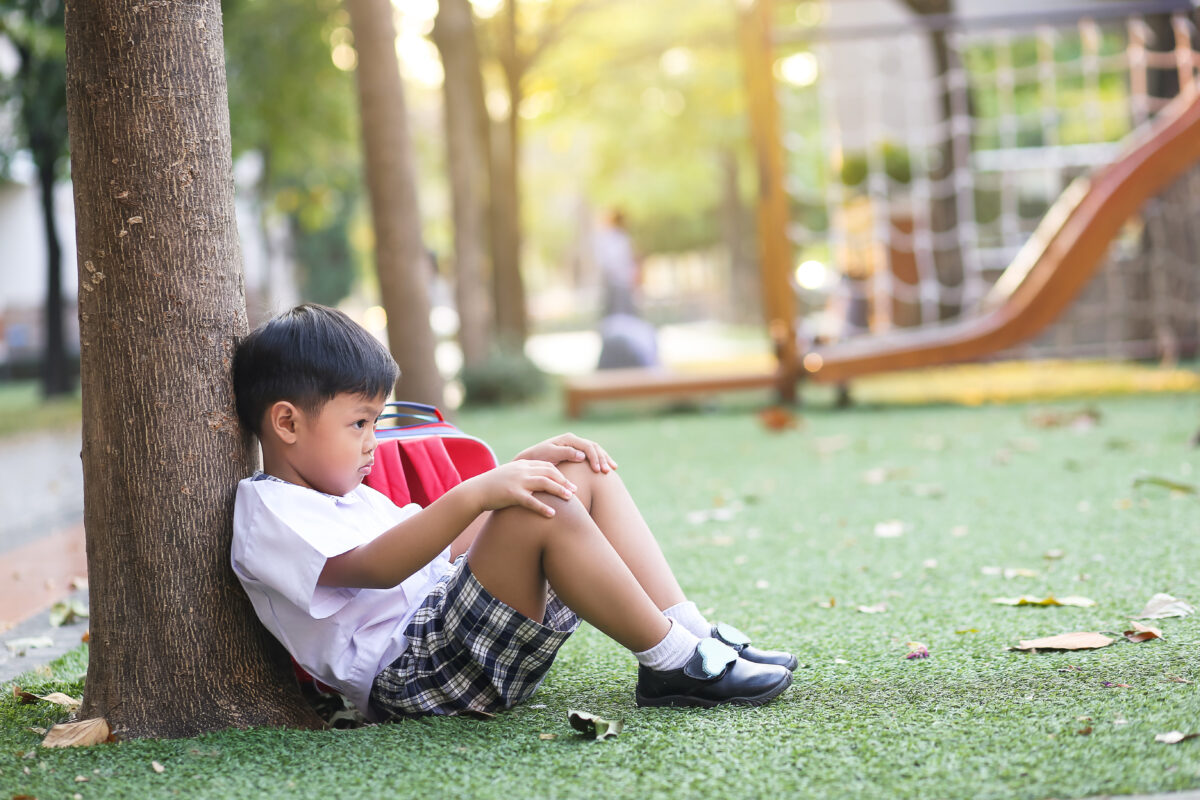
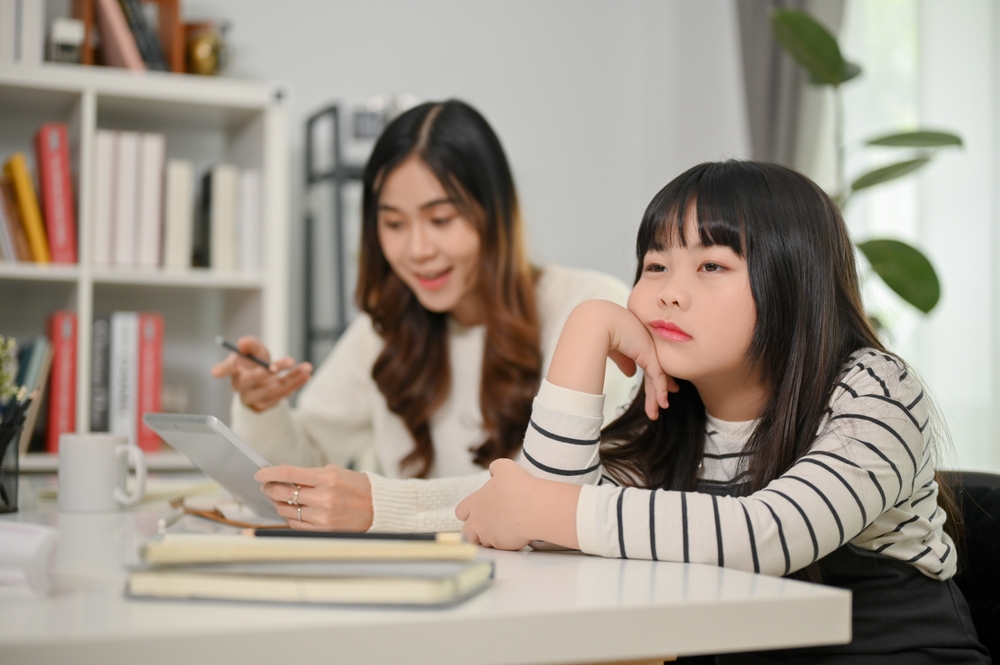
And so, I also began to enroll my child in various courses, but the resistance I encountered was beyond what I had ever imagined. During the years from my son’s second to fourth grade, even though the number of courses he attended was not extensive, conflicts often arose between mother and son due to the insistence on him participating in additional extracurricular activities. I couldn’t bear to see both of us suffer from the results of these clashes, so I asked myself: “What is truly important for a child? To possess a wealth of knowledge but carry an unhappy heart, or to have a lively, cheerful, and positively charged life?” Even though I hadn’t yet studied marriage and family therapy at that time, I still believed that a harmonious family relationship was the cornerstone for a child to have a healthy life.

In the end, I decided to no longer “force” my son to participate in activities he disliked. By letting go in this manner, I actually created space for him to learn to take responsibility for his own decisions. He would let me know what he wanted to learn or even if he wanted to attend Chinese tutoring at the appropriate time. These exercises in autonomy and responsibility, unwittingly, became invaluable assets for my son in the future. They proved beneficial in his education and career, leading to success in every aspect.


In reality, many parents, like myself back then, find themselves in an environment of intense competition, where they see other mothers doing the same crazy things. This makes those actions seem not crazy, but rather the norm. Even if reluctantly, they feel compelled to do the same. However, children find various ways to express to us that they are struggling, that they cannot accept it! The question is, do mothers really see it? If parents have a short-sighted perspective and are anxious only about gaining an initial advantage, focusing solely on creating fleeting competitive edges for their children while neglecting to establish qualities that contribute to their long-term development, then in the end, the casualties may extend beyond just the mother-child relationship to include the child’s life itself!

Parents Daily 為全港父母提供關於親子育兒、升學的豐富短片和內容,專輯內容包括「有星有Say」、「校長有話兒」等節目。我們以輕鬆活潑的方式為父母們提供培養孩子的資訊,更會邀請幼小校長、名人、資深教育工作者等分享教學、親子心得和實戰經驗,讓父母可以在這裡得到實用資訊之餘,更可認識更多互相分享、互相扶持的同行者。

Put yourself in the other person’s shoes. Fresh-Keeping Method for a Happy Marriage

Written by: Founder of Parent-Child Classroom and
Senior Psychological Counselor, Ms. Leung Hung Yuk

A lady said, “You’re truly enviable – your husband is even afraid of you!” Upon hearing this remark from her friend, she playfully responded, “If you want your husband to fear you, just pretend to be a ghost and scare him, wouldn’t that work? But do you really want to scare him like that, making him afraid of you? Do you think the marriage will become happy because of that?”

Firstly, we need to understand what makes a “happy marriage.” A marriage isn’t solely about individual happiness; a happy marriage requires three key elements: mutual acceptance, intimacy, and harmonious coexistence.

Couples’ Self-Consideration Hinders Communication


When faced with many couples seeking assistance, I find that through examining the state of their marriage and identifying the underlying issues, most couples struggle with their own “self.” Personal traits can also contribute to problems that obstruct communication. Many women express that their husbands lack a sense of “security,” while on the other hand, men often feel they are not receiving the “respect” they deserve from their wives.


In fact, the happiness of a marriage is closely related to the feelings, reactions, and behavioral feedback of the two individuals involved. This is due to the fact that both people’s existing beliefs and thoughts have an impact. When entering into marriage, it’s necessary to adjust one’s mindset and beliefs first in order to approach various issues in the marriage with a positive attitude.

Considering Each Other’s Situations and Reflecting on Oneself

Once, while I was working outside and returned home late, I intended to just find any restaurant to have a meal due to the late hour. However, my husband and son had visited several restaurants and still hadn’t made a decision. I expressed my displeasure to my husband, and when he saw my expression turn sour, he naturally responded with silence in return. As a result, during that dinner, we all ate silently on our own. I felt my husband’s reaction was somewhat petty, which left me feeling unsatisfied and irritated.

The next morning, upon reflection, I pondered on my husband’s perspective. What did he need in that situation? Lately, he had been under a lot of work stress, which had worn down his patience and tolerance. Faced with my unresponsive reaction, he naturally felt uncomfortable. So, I decided to send him an email expressing my concern.


In a marriage, which couple has never had conflicts? The existence of problems between spouses is not important; what truly matters is how you handle those problems. When you’re willing to introspect and examine yourself, and when you expand beyond your own feelings, you’ll discover the needs of those around you and your partner.

The “Fresh-Keeping Method for a Happy Marriage” is about both “you” and “me” being happy. When you’re willing to embrace your partner’s weaknesses and positively accept your spouse, it naturally brings you closer and enhances the resilience of the marriage.

Discussion: Could you share your experiences in dealing with your spouse?

Parents Daily 為全港父母提供關於親子育兒、升學的豐富短片和內容,專輯內容包括「有星有Say」、「校長有話兒」等節目。我們以輕鬆活潑的方式為父母們提供培養孩子的資訊,更會邀請幼小校長、名人、資深教育工作者等分享教學、親子心得和實戰經驗,讓父母可以在這裡得到實用資訊之餘,更可認識更多互相分享、互相扶持的同行者。

Happiness is actually simple – enjoy quality time with children

Written by: Marriage
and Family Therapist, Child Play Therapist, Lee Wai Chee

Everyone hopes to find happiness, and parents are certainly no exception. Many times, parents are even willing to sacrifice their own immediate needs and happiness, hoping to exchange them for their children’s “happy life” in the future.

Most parents understand that their children’s future “happiness” is by no means guaranteed one hundred percent. However, many parents believe that not striving today will inevitably lead to failure tomorrow. In addition, the social atmosphere advocates “doing more is better than doing less,” and even considers not doing anything as laziness and passivity. As a result, all parents and children find themselves doing more and more, gradually losing their direction.


In online discussion forums, I often see some parents criticizing society and the education system for putting excessive pressure on children, stifling their growth space. However, on the other hand, they helplessly push their children to do various exercises every day, showing their helplessness and sense of powerlessness. The contradictions and dilemmas faced by parents are understandable, but these fears and anxieties can cause parents to easily miss the insights that children give us.


When a baby is born, they live a simple, direct, and natural life every day. When they are hungry, they eat; when they are full, they sleep; and when they wake up, they play. They explore the world in their own way and interact with the people around them. They laugh heartily when they are happy and cry out loudly when they are sad. Children tell us that human needs are actually quite simple, and as long as these needs are satisfied, they will be happy. It’s just that the adult world has become increasingly complex, and people’s desires have grown, causing adults to forget even their own needs and, as a result, become increasingly unhappy. Ironically, we still assume that we understand the “key” to a “happy life” and teach children how to find happiness.

Today’s society is filled with the anxiety and unease of adults who fear being marginalized by society and worry that their stable lives are threatened. As parents, they are even more concerned about their children’s future lives. In fact, children understand the essence of happiness best because they naturally live freely and at ease. However, somewhere along the way, parents hope that their children can adapt to the distorted rules of the real world as soon as possible, inadvertently erasing their natural and childlike qualities.

A child’s growth takes time. If parents can observe their lives with a calm mind, be patient, slow down, and enjoy every moment spent with their children, they may rediscover that happiness is not in the future but in the present moment.

Parents Daily 為全港父母提供關於親子育兒、升學的豐富短片和內容,專輯內容包括「有星有Say」、「校長有話兒」等節目。我們以輕鬆活潑的方式為父母們提供培養孩子的資訊,更會邀請幼小校長、名人、資深教育工作者等分享教學、親子心得和實戰經驗,讓父母可以在這裡得到實用資訊之餘,更可認識更多互相分享、互相扶持的同行者。

Setting boundaries is better than trying to prevent children from making mistakes

Written by: Peggy Ho Pui Yee, Founder and Volunteer Executive Director of Good Love Passion

Being overly critical is the most common mistake parents make in disciplining their children. The phrase “love deeply, scold severely” reflects the emotions of most parents. Parents often fear that their children will develop any undesirable behavior during their growth, which may have lifelong consequences. Therefore, when disciplining their children, parents often resort to meticulous criticism as a way to remind them. In reality, making mistakes is an essential part of a child’s growth process. As children constantly change and grow, parents need to adapt to their developmental needs and adjust their approach to dealing with their behavior, even changing the way they interact with them.

For example, when a child fails to complete their homework on time, parents should calmly handle this common occurrence, as it is an opportunity for the child to improve and grow. Similarly, when a child talks back, it may indicate their emerging independence and critical thinking skills. It doesn’t necessarily mean they lack respect for their parents. As children grow older, they develop their own thoughts, opinions, and perspectives on various aspects of life. They also desire parental acknowledgment. As parents, we may not agree with these behaviors, but even in disagreement, we can understand the underlying needs of our children. This allows us to communicate more effectively with them and utilize appropriate disciplinary methods.


“While knowledge can change destiny, attitude determines everything!” Explosive anger and harsh accusations from parents are ineffective in discipline and serve no purpose. When parents understand how to gently and firmly assist their children and incorporate respect into daily life, children will develop a better understanding of rules and boundaries. Consequently, they will exercise more self-control and establish their own standards for behavior. With these standards in place, they will naturally become more independent, responsible individuals. Therefore, parents should establish boundaries in their children’s daily lives during their early childhood stages.


Since the age of one and a half, my daughter understood that writing is done on paper. Therefore, even at the age of 3, she has never stuck a sticker on the pristine walls of our home. She knows her boundaries and understands that a responsible child should keep the house clean. It is her responsibility. Parents establish guidelines for children to follow before discussing whether they are obedient or not.

When setting boundaries for younger children, it is important to be clear and specific. For example, you can say to a toddler, “If you can’t do it, it means you’re not behaving.” However, for young children, the term “not behaving” is vague and difficult for them to grasp. In addition, when setting boundaries, it is necessary to establish the consequences of not complying. It is important to emphasize that these consequences are “results” and not “punishments.” Consequences are simply the natural outcome of an agreement between both parties, operating under natural laws, and they are distinct from punishments. For example, after playing, if a child is expected to clean up their toys, they can continue playing next time only if they tidy up. However, if they don’t clean up, according to the previous agreement, their toys will be confiscated for two or three days.

At this point, parents must make it clear to the child that this is the natural consequence of not fulfilling the agreement, not a punishment. Another example is when parents discuss with their child the time limit for watching TV or using electronic devices and set specific time boundaries. Similarly, if the child exceeds the designated time and doesn’t turn off the device, according to the previous agreement, they won’t be allowed to watch or use it for the next three days. When setting boundaries, parents need to ensure they are reasonable. Otherwise, it would be unfair to the child, making them more likely to cross the boundaries and become disobedient in the future.

While parents have the responsibility to teach children proper behavior, if the methods used are too impatient and harsh, lacking an understanding of the child’s growth process, it may lead to negative effects. Therefore, we should provide children with experiences of taking initiative to change for the better, engage in serious discussions, rather than resorting to severe punishments. Approaching the situation with a calm and composed demeanor can assist children in transforming their mistakes into opportunities for growth. Just like how children inevitably fall while learning to walk, we encourage them to pick themselves up and take another step forward.

When faced with a child’s misconduct, it is important to consider how to handle the situation in a way that fosters their ability to change. People generally do not intentionally make mistakes; the reason for making mistakes is often due to a lack of awareness. Making mistakes is not inherently frightening for children; what is truly concerning is making mistakes without understanding where they went wrong or how to correct them. If parents can approach their child’s mistakes with the right mindset and guide them towards making corrections using appropriate methods, these mistakes can become opportunities for reflection and progress. It also enhances the chance for communication between parents and children. Let us transform our children’s mistakes into beautiful errors.

Parents Daily 為全港父母提供關於親子育兒、升學的豐富短片和內容,專輯內容包括「有星有Say」、「校長有話兒」等節目。我們以輕鬆活潑的方式為父母們提供培養孩子的資訊,更會邀請幼小校長、名人、資深教育工作者等分享教學、親子心得和實戰經驗,讓父母可以在這裡得到實用資訊之餘,更可認識更多互相分享、互相扶持的同行者。

How can parents deal with a more self-centered child?

Source: Registered
Clinical Psychologist,
Yiu Fong Lee

Many parents find that their children can be quite self-centered. When playing games or interacting with a group, they always want others to follow their rules. For example, a 5-year-old girl insists on playing with building blocks while her friend wants to play with cars. In such a situation, what should parents do? If the child becomes unhappy and self-centered, she may throw a tantrum and refuse to play with others. People may perceive this child as stubborn or temperamental. Here are a few methods that parents can consider to deal with their self-centered child.

First, it’s important to acknowledge the child’s emotions. Parents can approach the child and say, “Yes, I understand that you are feeling angry and unhappy right now because you really want to play with building blocks, but the other children don’t want to. Does it make you feel upset that you can’t play with the building blocks?” At this moment, parents can try patting or hugging the child, providing a sense of affirmation and closeness, allowing the child’s emotions to gradually calm down. When the child appears calmer, it’s an opportunity to help her move on to the next step.

The second step is called perspective-taking or putting oneself in others’ shoes. Encourage the child to imagine how the other person feels by entering their world or role. Parents can engage in role-playing with the child. For example, if the girl was A and the other child was B, the girl can now pretend to be B, and the parent can pretend to be A. The parent can imitate her tone and say, “I don’t want to play! I don’t like playing with cars! I must play with building blocks!” Then, the parent can ask the child, “How does that make you feel?” The child usually responds with, “He always insists on playing his way, and I don’t want to play with him. I feel unhappy.”


Parents can also ask the child, “If that’s the case, do you still want to play with this child and spend time together in the future?” The girl might respond, “I don’t really want to. If that’s the case, I’ll have to play alone by myself, and it’s boring.” Children usually want someone to play with.


Moving on to the third step, learning problem-solving. Parents can brainstorm ideas with the child, such as trying a game of rock-paper-scissors with the other child. It could be agreed that this time the winner gets to decide, and next time it could be the loser’s turn. Alternatively, we can switch and combine different ideas creatively. For example, in the case of playing with building blocks, can we play with both the building blocks and the cars? We can build a parking lot with the blocks and then let the cars drive on them. This way, we can play together.

We help the child come up with different types of solutions, but the most important thing is for them to understand how their behavior affects and impacts others, and how they can change their behavior so that others would be more willing to play with them. This is known as prosocial behavior.

Parents Daily 為全港父母提供關於親子育兒、升學的豐富短片和內容,專輯內容包括「有星有Say」、「校長有話兒」等節目。我們以輕鬆活潑的方式為父母們提供培養孩子的資訊,更會邀請幼小校長、名人、資深教育工作者等分享教學、親子心得和實戰經驗,讓父母可以在這裡得到實用資訊之餘,更可認識更多互相分享、互相扶持的同行者。

How can I avoid being biased when caring for two children?

Source: Registered Clinical Psychologist, Yiu Fong Lee

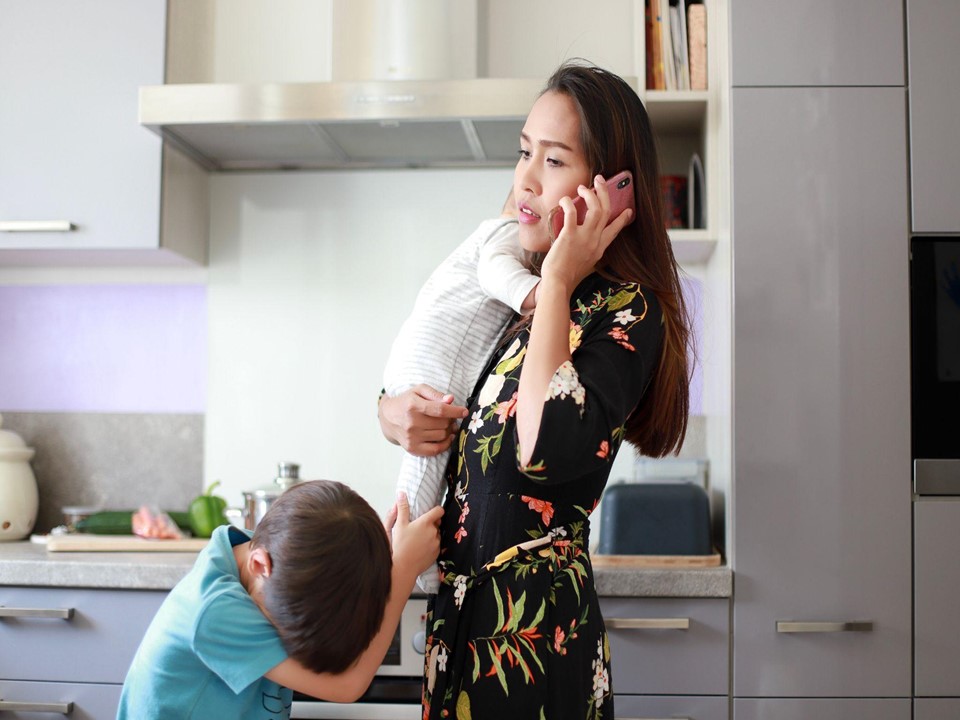
Parents are sometimes overwhelmed when faced with two children. For example, when the older sibling comes to you, the younger sibling is crying. Often, we only care for the younger sibling and neglect the older one, who may say that the parents are biased and only care for the younger one. How do we try to balance the care between the two children and make them feel equally loved?

In the case of the above, perhaps when an older sibling comes to see you, your mother should tell him, “I need to take care of the younger sibling now because he may not be feeling well or he is crying. This will let the older sibling know that his mother needs to look after his younger sibling, “but mom is also very concerned about your situation, so why don’t I come back to you later, when mum has had some time to see what you need or to talk to you?”

Of course, if both parents are at home, the work can be divided. The father will stay with the older child and the mother will stay with the younger child, but Hong Kong people are busy and there may be only one parent at home, so there is a need to prioritise. When to take care of older children? When to take care of younger children?


The second scenario is to invite older brother or sister to join you in caring for younger sibling, for example, “Why don’t you come and help me and we’ll try together to see if we can calm him down together. For example, pat him, sing to him or talk to him. If the older brother or sister does this, the mother can give recognition and encouragement: “You are really doing a good job, you are a very good brother or sister, I am really happy to have such a good little helper. This makes him feel that he can be a part of it and that he can be a big brother or sister to help us out!


But after we have comforted the junior, we need to go back to the older sibling, asking him why he was coming to me. Does he want to talk to me or play with me?

Also, the most important thing is bedtime, as this is the most intimate time for bonding. If both children are also in a stable mood, we can have a nighttime routine for the three of us before bed. For example, we can sing together, listen to stories, and give each other a pat or a back massage. Mum may be able to pat both children while singing; we may pat one child with the left hand and one with the right, and invite a bigger brother or sister to join in the patting process. Maybe he pats his mom with one hand and his younger brother with the other, so that there is an intimate moment shared by the three of us, and sleep is like a relationship with the parents, but at the same time a time when the three of us are together.


We need to create regular and separate one-to-one special parent-child time, for example, mom with the older child on Monday evenings from 7 p.m. to 8 p.m. and dad with the younger child on Tuesday evenings from 7 p.m. to 8 p.m.

In this way, the roles of the parents are switched and they spend time with different children, one on one, so that they can feel that their parents have a close time with them during this special parent-child time and so that the child can choose what he likes to play with, and then the parents follow the child’s suggestions and let the child take the lead.

For example, if he wants to play with toys, be with him; if he wants to play board games, be with him. At that time, just accompany him wholeheartedly. You may describe how he is feeling at the moment or what he is doing, so that he can feel that his parents are willing to give their time and love to him, and you may also plan for his siblings to have this special bonding time so that they can feel that their parents love them equally. We hope that the above methods will help parents manage the relationship between the two children so that they can feel equally loved by their parents.

Parents Daily 為全港父母提供關於親子育兒、升學的豐富短片和內容,專輯內容包括「有星有Say」、「校長有話兒」等節目。我們以輕鬆活潑的方式為父母們提供培養孩子的資訊,更會邀請幼小校長、名人、資深教育工作者等分享教學、親子心得和實戰經驗,讓父母可以在這裡得到實用資訊之餘,更可認識更多互相分享、互相扶持的同行者。

Categories
Parents Zone Parents Zone Parents Zone Parents Zone Parents Zone Parents Zone Parents Zone Parents Zone Parents Zone

Will getting water in the ears cause Otitis media? Do you need to help children clean their ears?

Source: Pediatric
Specialist, Dr. Lam Ka Yee

In fact, earwax is a normal secretion in the ear canal, and its function is to protect the ear canal and reduce the risk of bacterial infection. Earwax will naturally flow out on its own, so in general, parents do not need to specifically clean the earwax inside their children’s ear canals. Unless the earwax has flowed to the outer ear or is at the opening of the ear canal, parents can gently clean it with a damp cotton swab.


When parents clean the earwax in their children’s ear canals, even if they use a cotton swab gently, there is a chance of injuring the mucous membrane of the ear canal, leading to inflammation or even damaging or puncturing the eardrum. If parents accidentally push the earwax further in or if the child feels uncomfortable during the cleaning process, it is best to take the child to see a doctor to determine whether it is necessary to remove the earwax. In general, there are only two situations where a doctor may recommend removing earwax for children.


First, if earwax completely blocks the ear canal, it can affect a child’s hearing. Second, doctors need to carefully examine the child’s eardrum. If parents detect an unusual odor from their child’s ear, they should promptly take them to see a doctor to determine if there is a possibility of inflammation in the ear canal causing the odor.

If a child feels discomfort in their ears after taking a bath or swimming, parents can gently tilt their child’s head and use a towel to gently dab away the water that has already flowed out. It is important not to use items like cotton swabs to clean the inside of the ears. Getting water in the ears does not cause Otitis media as the ear canal and middle ear are separated by the eardrum. Even if water enters the ears, it will not pass through the eardrum into the middle ear, so getting water in the ears while swimming does not cause Otitis media.


What conditions can lead to Otitis media? Otitis media are generally caused by upper respiratory tract infections, where bacteria travel from the throat through the Eustachian tube and reach the middle ear, resulting in inflammation. Therefore, it is not related to getting water in the ears.

Parents Daily 為全港父母提供關於親子育兒、升學的豐富短片和內容,專輯內容包括「有星有Say」、「校長有話兒」等節目。我們以輕鬆活潑的方式為父母們提供培養孩子的資訊,更會邀請幼小校長、名人、資深教育工作者等分享教學、親子心得和實戰經驗,讓父母可以在這裡得到實用資訊之餘,更可認識更多互相分享、互相扶持的同行者。

What parents can do when children start to rebel?

Source:
Founder of Family Dynamics and Marriage and Family Therapist, Rachel Ng

As children grow up, they begin to learn to say no and may seem to rebel against their parents in everything. This is related to the child’s temperament. When faced with a child who is very persistent, parents may easily feel that the child is not obedient or mischievous, but in fact, this only reflects some of their personality traits. If a child often says “No, no,” parents need to spend more time talking to them and mutually discussing each other’s needs.

Don’t think that just because a child is 5 years old, they are not capable of discussing it with you. In fact, we often speak to children in a one-way manner; that is, we think they are just children. When do they brush their teeth? When do they wash their faces? When do they go to bed? We all think so, and we tell them so! But when a child refuses to cooperate, parents can negotiate with them about everyone’s needs, such as if they don’t like to follow a certain routine or activity program. Parents can let the child express their own thoughts. When they have room to express their thoughts, their first feeling is acceptance from their parents, rather than criticism or rejection.

If a child hears their parents say, “Why don’t you listen to me again? Why don’t you do what I say?” They will feel accused and are likely to develop a sense of resistance, leading to a vicious cycle. To avoid this, parents should listen carefully to what their child is saying and thinking. Parents may think that if they listen to their child, they will only play and not brush their teeth or sleep. This is not necessarily the case. Children who are very persistent just want to express their own opinions and want their parents to understand, which does not mean that they cannot change their minds

As long as the child maintains a good relationship with his parents, his needs can be communicated to them, and they are willing to listen and respond by saying, for example, “If I can do it, I’m happy to cooperate with you. If I can help you, I’ll be happy to. But if I can’t, I hope you can help me finish my work quickly and give me some rest time.”

Children love their parents very much, and because of this good relationship, they are willing to cooperate with their parents’ needs and adjust their own needs. But if parents do not listen to their children, ignore their thoughts, and do not consider what they want, it will create a confrontational situation. For example, parents tell their daughter to eat her food cleanly, but she seems to deliberately make a mess. This may have already reached the edge of confrontation. Don’t enter into a cycle of confrontation.

Parents Daily 為全港父母提供關於親子育兒、升學的豐富短片和內容,專輯內容包括「有星有Say」、「校長有話兒」等節目。我們以輕鬆活潑的方式為父母們提供培養孩子的資訊,更會邀請幼小校長、名人、資深教育工作者等分享教學、親子心得和實戰經驗,讓父母可以在這裡得到實用資訊之餘,更可認識更多互相分享、互相扶持的同行者。

Is it important to establish a secure attachment with children?

Source: Specialist in psychiatry, Dr. Leung Yuen Shan

Every time the child is sent to school, they cry non-stop and have a difficult time separating from their mother. This may be a sign of a lack of security. Many studies have shown that a secure attachment is a foundation for a child’s success in life. How can parents establish a secure attachment with their children?


In fact, a secure attachment requires deliberate effort and a lot of hard work from the mother. A child’s trust in the world and their own confidence are closely related to their secure attachment to their mother.

When a child doesn’t feel safe, they usually have trouble being apart from their mother. Usually, when a child is separated from their mother, they may cry and fuss a bit but can be easily calmed down. However, a child with an unstable sense of security may become very upset and throw tantrums quickly. This is a sign that parents need to work on establishing a sense of security.

So, how can parents establish a sense of security? First of all, the mother must take care of herself. The mother’s mental health is the foundation of everything. If the mother is not taking good care of herself, she will not be able to take care of her child. If she finds that she has a real emotional problem, such as high mood swings, irritability, crying, insomnia, or the inability to eat, she should deal with it as soon as possible for the sake of the child’s future.

Children are constantly building a sense of security and trust in the world and people as they grow. Parents can continue to respond to and pay attention to their children during their childhood and establish more parent-child time through different activities to increase intimate communication. All of these efforts can help the child build confidence and a sense of security in the world.

Parents Daily 為全港父母提供關於親子育兒、升學的豐富短片和內容,專輯內容包括「有星有Say」、「校長有話兒」等節目。我們以輕鬆活潑的方式為父母們提供培養孩子的資訊,更會邀請幼小校長、名人、資深教育工作者等分享教學、親子心得和實戰經驗,讓父母可以在這裡得到實用資訊之餘,更可認識更多互相分享、互相扶持的同行者。

How can eating habits make your child’s skin healthier?

Source: Registered Dietitian (Public Health) (UK), Ng Pui-Yu

Many kids have dry skin or even eczema, and their parents work hard to find the right moisturizers and other skin care products for them. In fact, in addition to topical skincare products, we should also pay attention to children’s diets. The most direct way, of course, is to drink more water. How much water should be drunk?

 In fact, our body’s need for water is deeply influenced by the weather. For example, in dry weather, we need more water, as well as to account for children’s activity levels and how much they sweat. The water content in food also affects their need for water. If a child urinates every 3 to 4 hours and the urine is light yellow with no strong odor and the stool is not very hard and does not cause difficulty during bowel movements, it usually means that their water intake is sufficient.


For children aged 2 to 5, they need about 4 to 5 cups of fluid a day, and water should be the main source. Unsaturated fatty acids, like omega-3, are also important for maintaining the integrity of cell membranes, which keep harmful substances out and keep the skin moist and flexible. Omega-3 fatty acids can also help calm immune responses that are too strong in people with skin allergies or eczema.

We should also avoid certain foods, such as candies, cookies, and white bread, which are refined foods. Instead, we should choose low-glycemic index foods, such as brown rice and whole wheat bread, which are important for controlling sensitive conditions. Antioxidants, including common vitamins A, C, and E, are also important and can be found in fruits, vegetables, and nuts of different colors, making them great sources of antioxidants.


In summary, to have healthy skin, in addition to having enough water, you should eat high-fat fish such as salmon or yellow croaker twice a week. You can also replace some cookies and candy with plain nuts, fruits, and so on, and it is ideal to eat a variety of vegetables and fruits.

 By the way, if a child’s chewing ability is not well developed, there is a chance of choking when eating nuts. Therefore, we should choose some smaller nuts, such as pine nuts, which are also a good option.

Parents Daily 為全港父母提供關於親子育兒、升學的豐富短片和內容,專輯內容包括「有星有Say」、「校長有話兒」等節目。我們以輕鬆活潑的方式為父母們提供培養孩子的資訊,更會邀請幼小校長、名人、資深教育工作者等分享教學、親子心得和實戰經驗,讓父母可以在這裡得到實用資訊之餘,更可認識更多互相分享、互相扶持的同行者。